Windows shape how a home feels, how much light fills a room, and how the building performs across seasons. In New York the weather, street dust, construction and winter salt all press against glass every day, and what starts as a faint mark can turn into a costly problem when left alone.
Small chips can turn into full replacements, failed seals can let moisture into wall cavities, and hard mineral stains can etch glass irreversibly. A professional inspection and the right service preserve views, protect the glazing, and help avoid sudden surprises when seasons turn.
Below you will find seven clear signs that your windows need professional attention. For each sign we explain what it means, why it matters for homes in New York, and which service options typically address the issue, including rough cost ranges and expected timelines.
1. Stubborn stains and hard water truths
When a window keeps looking cloudy after a rain or white rings appear where water pools at the sill, the problem is usually mineral deposits and baked-on residues rather than ordinary dirt. These marks tend to show up where splashes concentrate, along frame edges and in corners, and they return fast after a wash. If your usual spray-and-wipe routine fails to bring back the shine, you are probably seeing signs that require professional attention.
- Why household methods often fail
Ordinary soaps and glass cleaners remove grease and fingerprints, but they do not dissolve the mineral salts that bond to glass surfaces. Hard water carries calcium and magnesium which deposit as a crystalline film when water evaporates. Over time those deposits can interact with airborne pollution and organic residues and produce stains that resist simple wiping.
- What happens if you leave it alone
Minor marks can harden into permanent etching that reduces light transmission and ages the look of your windows. Etched glass scatters light, which makes interiors look duller and lamps or displays appear muted. For storefronts and homes with panoramic views this loss of visual quality can affect atmosphere and value. Left untreated, mineral buildup can also trap moisture at seals and frames and accelerate wear on gaskets and paint.
- Professional options that work
Chemical cleaning uses targeted formulations that dissolve mineral films without harming glass coatings, frames, or surrounding materials. In cases where deposits have begun to etch the surface, a combination of gentle mechanical polishing and resealing may be required to restore optical quality. Professionals choose products and methods specifically for the glass type and any protective coatings, and they follow runoff and disposal practices that meet regulatory guidance.
- Prevention and practical steps
- Limit exposure to sprinkler systems and direct runoff when possible, since repeated wetting and drying accelerates deposits.
- Schedule periodic professional treatments if your location experiences hard water or heavy street pollution.
- Consider protective coatings or sealants recommended by a glazing specialist to reduce future bonding of minerals.
- Track where stains form most often and address drainage or splash patterns that concentrate water at sills or joints.
2. When glass starts to talk back
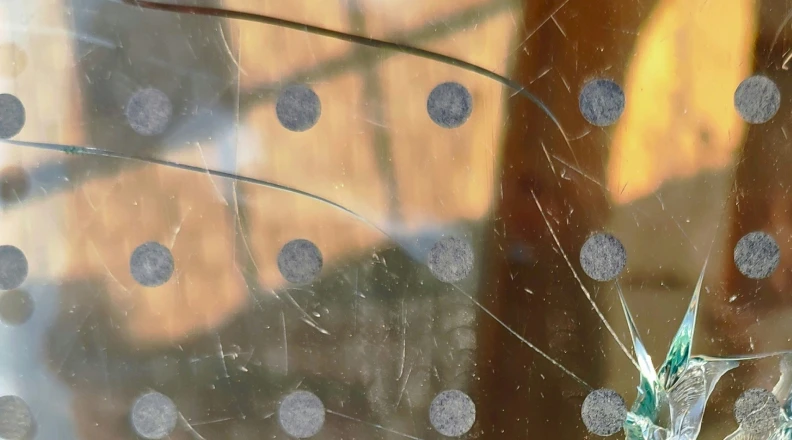
Tiny cracks, chips, and surface scratches may look harmless, but they tell a clear story about stress, movement, and exposure. Each mark is a point where the glass has already lost part of its strength, and in a city where temperature changes, vibration, and wind pressure are constant, that weakness can grow quickly.
- Why structural integrity matters
A window functions as both a visual and physical barrier. When glass is damaged, its ability to handle pressure and vibration declines sharply. Even a minor crack can spread through the sheet when the glass expands and contracts under temperature changes. If a piece breaks loose or collapses, falling fragments can create a serious hazard for pedestrians and property. The Occupational Safety and Health Administration emphasizes the importance of maintaining glazing in a secure condition and protecting workers during inspection and repair, as detailed in their fall protection and glass handling standards.
- When repair is still possible
Small surface scratches and shallow chips can often be polished out by professionals using fine abrasives and protective compounds. This process restores clarity without compromising the pane’s integrity. However, polishing works only when the damage does not penetrate beyond the surface layer. If the crack runs deeper or has reached the edge, replacement is usually the safer and more cost-effective choice.
- When replacement is the only safe route
Cracks that radiate from corners, chips near mounting points, or glass that shows signs of delamination indicate structural weakness. Under New York City’s facade-safety rules, glazing that fails structural or integrity assessments must be replaced to maintain compliance with Building Department standards. This ensures compliance with glazing standards and avoids liability issues in case of accidents.
Quick intervention limits both cost and risk. If you notice spreading cracks or loose fragments, scheduling an emergency visit is the best decision. Our emergency service at Top Team window cleaning provides same-day assessment and stabilization.
3. When the view turns cloudy
When you start to see fog, streaks, or small traces of mold trapped between glass panes, it usually means the sealed unit has lost its integrity. The insulating space between the panes is designed to stay completely dry and airtight, and once moisture finds its way in, the seal is no longer functioning as it should. This process happens gradually and often begins with a nearly invisible gap along the edge.
The U.S. Small Business Administration emphasizes that effective energy efficiency in buildings often depends on maintaining airtight building envelopes, which includes properly sealed windows and glazing units. A failed seal not only affects appearance, but can increase heating and cooling costs throughout the year.
Many people try to clean the fog from inside by drilling small holes or using moisture-absorbing kits, but those temporary fixes rarely stop the problem. The moisture returns, because the underlying cause, a compromised seal, remains unresolved. In some cases, trapped condensation encourages mold growth, which can spread to frames and surrounding materials if left untreated.
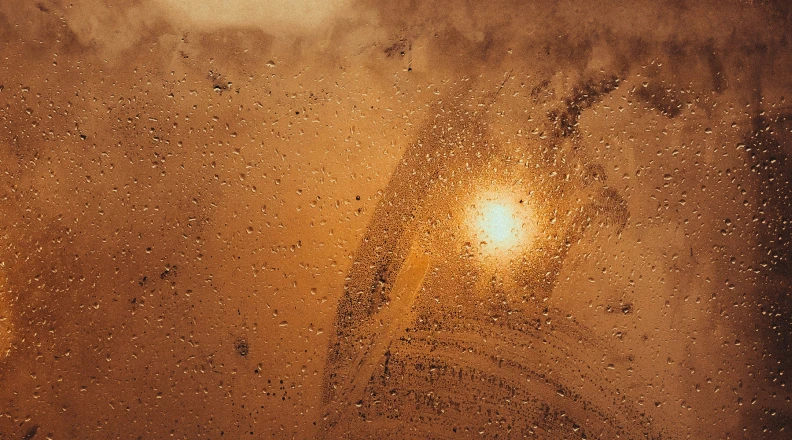
Professional assessment is the only reliable way to determine whether the window can be resealed or if a full replacement is required. Technicians use moisture meters and infrared imaging to locate the leak path and evaluate the extent of internal condensation. If the frame and glass remain structurally sound, resealing the unit may restore performance. However, when the internal desiccant is saturated or the glass has been permanently stained, replacement of the insulated glass unit becomes the most practical solution.
4. When the window is out of reach
Many New Yorkers live or work in buildings where windows are placed high above the ground or set deep into glass facades. These surfaces collect city dust, rain streaks, and construction residue that ordinary cleaning tools cannot reach. What looks like a simple task from the street quickly becomes a safety challenge once you realize that leaning out or balancing on a narrow sill is the only way to get there.
Attempting to clean high or awkwardly placed windows without professional support can be extremely dangerous. Even a small slip can result in severe injury, especially in older buildings with limited access points or unreliable ledges. The Occupational Safety and Health Administration (OSHA) highlights that falls remain one of the leading causes of workplace injuries, and the same risks apply to residents or maintenance staff trying to handle elevated glass surfaces on their own. Improvised ladders or unsecured platforms rarely provide stable footing, and a sudden gust of wind can turn a routine chore into an emergency.
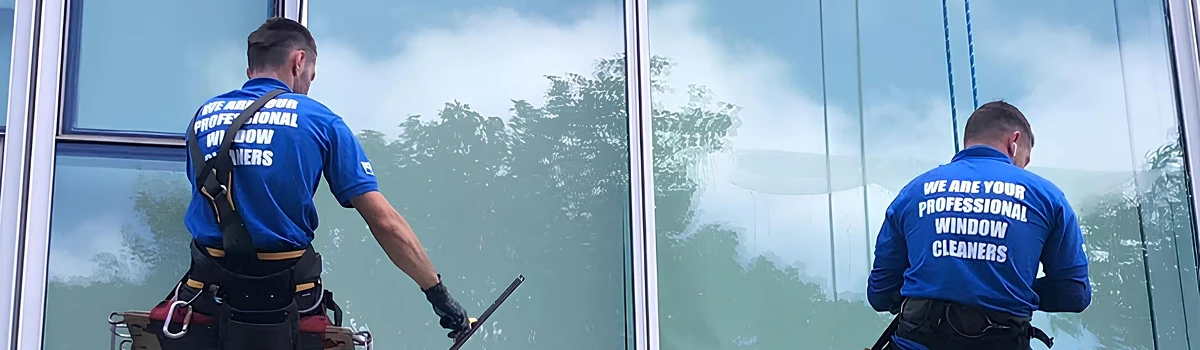
Professional teams are trained and equipped to work safely at height using specialized methods. Rope access cleaning, for example, allows technicians to descend along the facade while staying securely harnessed, maintaining close contact with the surface and full control of their movements.
Another solution for buildings with accessible facades up to several stories high is the water-fed pole system. It delivers purified water through extendable poles to rinse glass surfaces without leaving mineral residue. This system avoids ladders entirely and provides an even clean while technicians remain safely on the ground.
5. When the streaks keep returning

Sometimes the glass looks clean for a moment and then, within hours, dull lines appear again. Streaks that keep coming back are one of the clearest signs that your windows are being cleaned with the wrong methods or materials. The issue can come from the type of water, the cleaning solution, or even the weather conditions during cleaning.
- Water quality plays a major role
Tap water in many parts of the city contains minerals that leave visible residue once it dries. Those faint lines and spots are mineral deposits, and they can accumulate into a permanent haze if not removed properly. Professionals use demineralized or purified water systems that rinse away all particles, allowing the glass to dry evenly without streaks.
- Cleaning tools matter as much as the solution
Paper towels and common cloths often leave lint or trap dirt, which gets redistributed with each pass. Professional cleaners rely on specialized brushes and microfiber tools that capture fine dust and spread water evenly. The brush heads used in water-fed pole systems, for example, are designed to glide over the glass and reach into the corners without scratching the surface.
- Timing and temperature affect results
Cleaning windows under direct sunlight or on a hot day causes the solution to evaporate before it can be wiped away, which leaves streaks behind. Professionals schedule work during cooler parts of the day or adjust the cleaning method to match the temperature and humidity level. This attention to timing is especially important in summer when glass surfaces heat up quickly.
- Regular cleaning prevents buildup
When streaks appear repeatedly, they often indicate that a thin film of detergent or pollution has built up over several cleanings. A professional cleaning session can reset the glass surface, removing residues that household products cannot fully break down. After that, a maintenance plan helps keep windows clear for longer and avoids the return of those stubborn marks.
6. When windows start to resist movement
Windows that no longer glide smoothly or feel sticky when you try to open them often signal more than everyday dust. Airborne particles, street resin, and small fragments of construction debris can settle into the tracks and frames. When a window begins to stick, it can also indicate that the frame has started to warp or shift slightly with temperature changes. Wood expands and contracts through the seasons, while aluminum and vinyl frames can deform from long exposure to heat or uneven pressure.
Professional service helps restore smooth operation and prevent future wear. The process usually includes deep cleaning of the frames and tracks, careful removal of accumulated dirt, and re-lubrication of moving parts. In some cases, technicians reseal the contact points to ensure proper insulation and weather resistance. This attention to the full assembly keeps both the glass and the mechanisms in working order.
Property owners are responsible for maintaining openings and fixtures in safe and operable condition. Regular inspection and servicing help meet these standards while extending the lifespan of the windows themselves. A well-functioning window should move easily, close tightly, and stay clean within its frame, and once that balance is restored, the improvement is immediately noticeable.
7. When presentation becomes part of the value

There are moments when windows stop being only part of a building’s structure and start to play a role in how the space feels and performs. This usually happens when an apartment or house is about to be listed for sale or when a property is prepared for open house viewings.
Real estate professionals consistently note that presentation affects both perceived and actual value. According to insights from Zillow, small aesthetic details such as clean windows and well-maintained facades can influence how long a property stays on the market and even the final selling price.
Professional cleaning services ensure that windows are free of streaks, mineral deposits, and edge residue that can dull reflections or distort light. Technicians also treat the surrounding frames and sills, so the overall appearance aligns with the quality expectations of buyers. When sunlight moves through perfectly clear glass, it highlights finishes, flooring, and architecture, which strengthens the overall impression of the property.
Clean windows are an investment in comfort, safety, and long-term savings, because they prevent seal failure and reduce the need for costly replacements. If you spot any of the signs in this guide, contact us and schedule a quick assessment, and we will tell you exactly what your windows need.