The search for information about Local Law 11 begins for many building owners and property managers when a filing deadline approaches, a notice arrives, or questions arise about upcoming facade work. What first appears to be a straightforward compliance requirement often leads to a much longer list of decisions. Understanding who needs to perform the inspection, what happens if issues are identified, how the process fits into ongoing building maintenance quickly becomes essential.
New York City's Facade Inspection and Safety Program, commonly known as FISP and often still referred to as Local Law 11, requires buildings that are taller than six stories to undergo periodic exterior wall inspections. The inspection results must then be filed with the New York City Department of Buildings as part of a recurring five year cycle.
Although the regulations are well established, they can feel difficult to navigate for owners who don't deal with facade compliance every day. Inspection cycles, technical terminology, repair classifications, filing windows, coordination with multiple contractors often make the process seem far more complicated than it needs to be. This article explains the key parts of FISP in practical terms. It outlines what the program requires, how the inspection process works, what happens after a report is issued, and how building owners and property managers can plan ahead with greater confidence instead of waiting until deadlines begin to approach.
What exactly is required and what does the inspection actually involve?
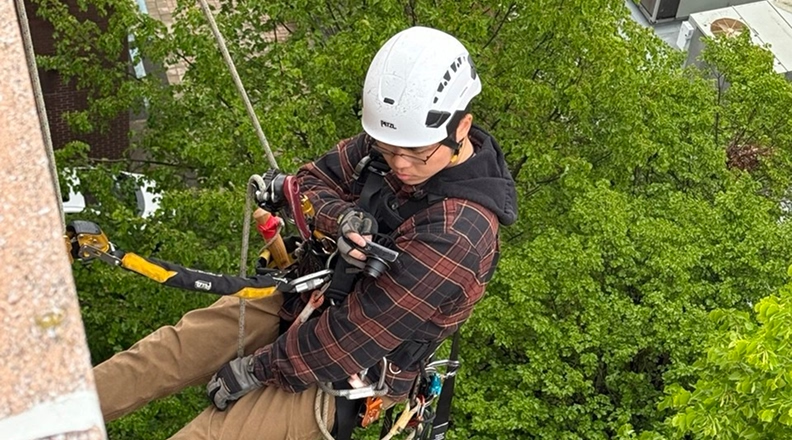
The process is often described using technical language, but its purpose is relatively simple. It's designed to identify conditions that could affect the safety of exterior walls and the public areas around them before those conditions become hazardous. The inspection extends beyond the visible facade and may include balconies, parapets, railings, ornamental features, window lintels, copings, and other components that could become hazardous if they deteriorate. Because many areas cannot be assessed accurately from the ground, inspectors often perform close up examinations using scaffolding or other approved access methods.
The examination is carried out by a Qualified Exterior Wall Inspector (QEWI), a New York State licensed professional engineer or registered architect who meets the additional qualification requirements established by the Department of Buildings (DOB) and is responsible for evaluating the observed conditions, documenting any areas of concern, and determining whether repairs or ongoing monitoring are necessary. The resulting report becomes the official basis for the building's filing with the New York City Department of Buildings, making the accuracy of the inspection an important part of the entire compliance process. After the examination is complete, the building receives one of three classifications.
- Safe classification indicates that the facade is performing as intended and no conditions have been identified that require repair or maintenance to preserve its structural integrity during the current inspection cycle. The owner continues with the normal FISP schedule and prepares for the next required examination.
- Safe with a repair and maintenance program (SWARMP) classification means the facade is considered safe at the time of inspection, but certain conditions should be repaired before they have an opportunity to develop into safety concerns. The QEWI establishes a recommended timeframe for completing those repairs, and owners are responsible for ensuring that the work is performed within that period.
- Unsafe classification requires immediate action because one or more facade conditions present a hazard to people or property. The QEWI must notify both the building owner and the Department, recommend appropriate public protection measures, and file the required documentation. The owner must install any necessary protective measures, such as a sidewalk shed where applicable, and begin addressing the unsafe conditions in accordance with Department requirements.
The questions worth asking before you make a decision
The next step is choosing the professional who will guide your building through it. The quality of the inspection influences every stage that follows, from the accuracy of the report to the planning of repairs and communication with the Department of Buildings. Taking time to evaluate a consultant before signing a contract can help avoid delays, unexpected costs, or unnecessary complications later in the project.
- Confirm the required qualifications
Since this designation carries specific licensing and experience requirements established by the New York City Department of Buildings, verifying those qualifications should always be the starting point. A consultant should be able to explain their credentials clearly and describe their role throughout the inspection and filing process.
- Look for experience with buildings similar to yours
Every facade presents different challenges: a mid rise residential building, a prewar masonry property, and a modern glass office tower all require different inspection approaches and different technical knowledge. Previous experience with buildings that share similar construction and facade materials often leads to a smoother project and recommendations that reflect the actual conditions of the property.
- Pay attention to communication
Technical expertise is important, but so is the ability to explain findings in language that owners and property managers can easily understand. A reliable consultant should be willing to discuss the inspection process, answer questions, explain the reasoning behind recommendations, and provide realistic expectations for the next stages of the project.
- Ask how the project will be coordinated
An inspection is often one part of a larger maintenance project. If repairs become necessary, additional professionals may need to be involved, including contractors, access specialists, and building management teams. Understanding how the consultant coordinates schedules, site access, documentation, and communication with everyone involved helps reduce unnecessary delays and keeps the project moving efficiently.
- Understand what the final report includes
The inspection report is the formal document submitted under the FISP Filing Instructions and serves as the official record for the building's compliance with the New York City Department of Buildings (DOB). It's reasonable to ask before work begins how findings will be documented, how photographs and supporting information will be presented, how repair priorities will be identified, and what level of detail you can expect in the completed report.
What the inspection leads to
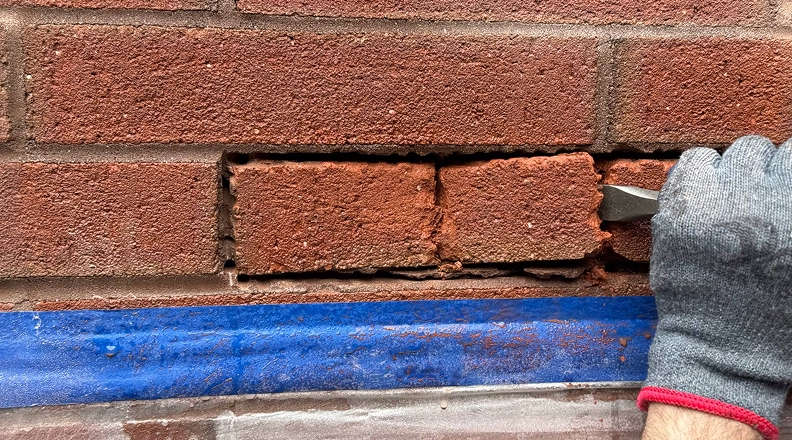
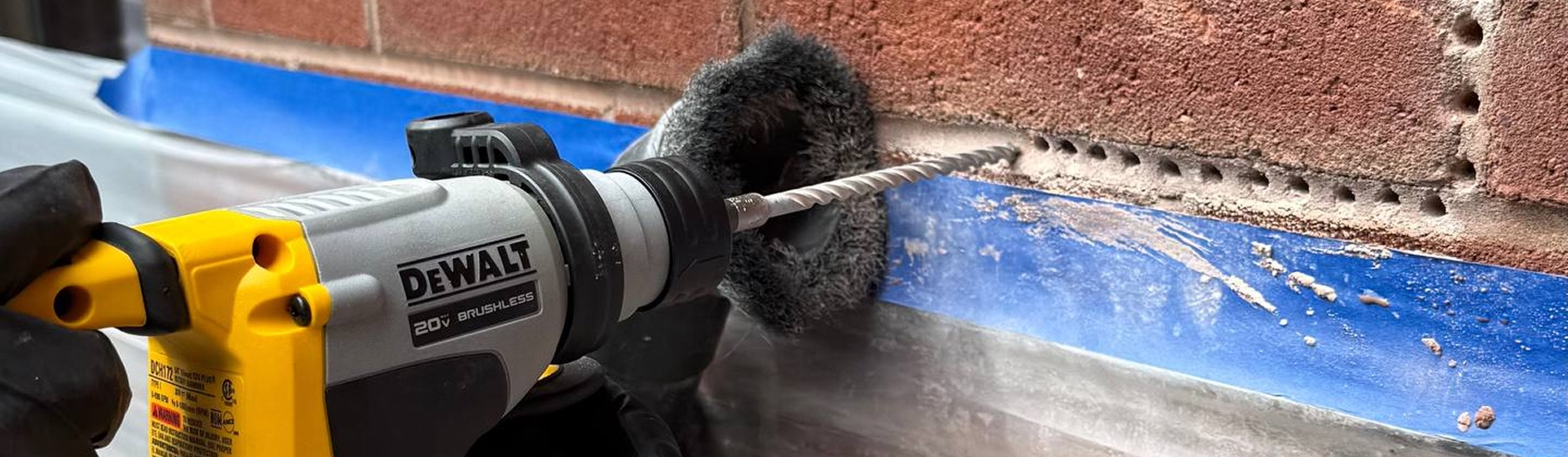
Receiving the inspection report isn't the end of the FISP process. It marks the point where building owners and property managers begin making decisions based on the findings. The scope of those decisions depends on the classification assigned by the QEWI and the condition of the facade. While some properties simply continue into the next inspection cycle, others require maintenance or LL11 facade repairs. But not every repair project looks the same. Some LL11 facade repairs involve replacing damaged masonry, repairing deteriorated joints, securing loose facade elements, or restoring components that have been affected by years of weather exposure. Others are more localized and can be completed without extensive construction work. The inspection report helps establish which repairs are necessary and allows owners to prioritize work based on the observed conditions.
Project timelines vary for many reasons. The size and height of the building, the complexity of the facade, the extent of deterioration, access requirements, permit approvals, weather conditions, and contractor availability all influence how quickly repairs can begin and how long they may take to complete. Costs are affected by many of the same factors, particularly when specialized access equipment, extensive restoration work, or ongoing public protection measures are required. Delaying required repairs often leads to larger challenges. Building conditions rarely improve without intervention, and problems that begin as isolated defects can expand, as moisture, seasonal temperature changes, and normal building movement continue to affect the facade.
Working with experienced partners from planning to facade access
By the time a building owner reaches the inspection and repair stage, the work usually needs a team that understands how facade projects move through access planning, field documentation, and coordination with the professionals responsible for compliance. Top Team’s LL11 inspection services are built around that kind of support, with an emphasis on safe facade access, close-up documentation, and reporting that helps the engineer of record move the project forward.
op Team supports commercial facade projects across New York City by providing certified access solutions for FISP inspections, Local Law 11 compliance, and exterior maintenance. Our team works alongside qualified exterior wall inspectors (QEWIs), architects, contractors, and building management professionals, helping facilitate close-up examinations, photographic documentation, and safe access to areas that cannot be evaluated from the ground.
If your building is preparing for an inspection cycle or requires facade access as part of a compliance project, contact Top Team to discuss your building's requirements and the most appropriate approach for your project.