
It often starts in an almost unnoticeable way. One morning the window looks slightly hazy, as if a thin layer of fog settled overnight. At first it feels like something that can be wiped away. You reach for a cloth, clean the surface, and step back expecting clarity to return. Instead, the same dull film remains, sitting somewhere beyond reach. As days pass, faint streaks or small droplets begin to appear between the panes, and the view outside loses its sharpness.
This is the moment when uncertainty sets in. Windows are meant to be simple, transparent, reliable. When something inside them changes, it raises questions that are not easy to answer right away. Is it moisture from the room, a result of weather, or a sign of damage? The fact that the marks cannot be touched or cleaned from either side makes the situation feel unfamiliar, and that unfamiliarity often leads to concern about what is happening inside the structure of the window itself.
In many homes, especially in cities like New York where seasonal changes are sharp and buildings face constant environmental pressure, this kind of visual shift is not uncommon. Temperature differences between indoors and outdoors, along with daily exposure to humidity and air pollution, gradually affect how windows perform. What appears to be a simple cosmetic issue is often the first visible signal of a deeper change in the sealed unit.
This is where the idea of condensation between window panes becomes important. The cloudiness you see is not surface dirt and it is not something that standard cleaning can resolve. It is moisture trapped inside the insulated glass unit, in a space that is designed to remain completely dry. Once that space is compromised, the window begins to behave differently, both visually and functionally.
Understanding this distinction is the first step toward making the right decision. What looks like a minor inconvenience can develop into reduced insulation, higher energy costs, and gradual damage to the window structure. Recognizing the early signs helps avoid unnecessary frustration and allows you to address the issue with clarity instead of trial and error.
What’s really happening behind the glass
Once it becomes clear that the haze cannot be wiped away, the question shifts from the surface to the structure of the window itself. What you see is not a layer on the glass, but a change inside it, and to understand that, it helps to look at how modern windows are built.
Most contemporary windows use a double pane or even triple pane system. Instead of a single sheet of glass, the unit consists of two panes separated by a narrow space. This space is carefully sealed and filled with air or an inert gas such as argon. The purpose of this design is to improve insulation, reduce heat transfer, and keep indoor conditions stable throughout the year. The seal around the edges plays a central role in this system. It keeps the internal space isolated from outside air and prevents moisture from entering. As long as this seal remains intact, the area between the panes stays dry and clear. The window performs as expected, both visually and functionally.
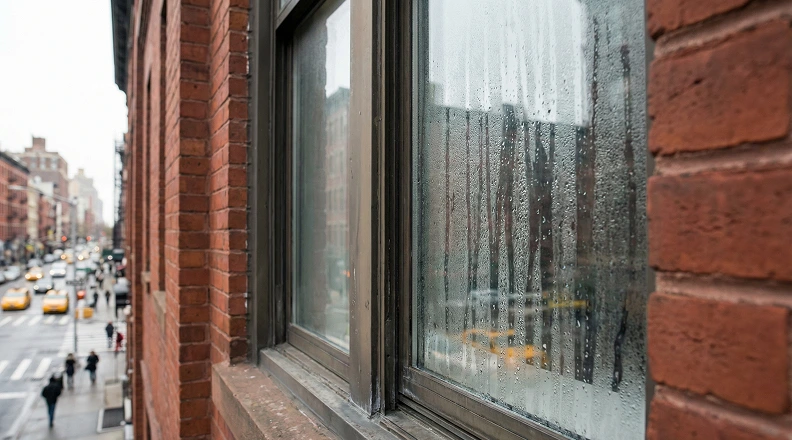
When window condensation between panes appears, it signals that this sealed environment has been disrupted. Moisture has found its way into a space that is not meant to be exposed to humidity. This is why the fog or droplets you see cannot be removed from the inside or outside surface. They exist within the structure itself, beyond direct reach. In many cases, this process begins gradually. The seal may weaken over time due to age, temperature changes, or constant exposure to environmental conditions. Once its integrity is compromised, even slightly, air and moisture can enter the gap between the panes. This leads to the formation of condensation that becomes visible under certain conditions, especially when there is a difference in temperature between indoors and outdoors. Moisture between double pane indicates that the insulating barrier is no longer fully effective. The inert gas that once helped regulate temperature may escape, and the window begins to lose its efficiency. This can affect indoor comfort and increase energy use, even if the change is not immediately obvious.
Where the clarity breaks down
Windows are exposed to constant pressure from both the environment and the building itself, and over time these factors begin to affect how well the sealed system holds together. Understanding what drives this process helps explain why condensation develops and why it tends to persist.
- Seal failure over time
The sealing material around the edges of a window is designed to last for years, but it is not permanent. It expands and contracts with temperature changes, reacts to sunlight, and gradually loses its flexibility. As this happens, tiny gaps can form along the edges. These gaps may be too small to notice, but they are enough to let air and moisture enter the space between the panes. Once that happens, condensation begins to form under the right conditions and remains trapped inside.
- Temperature differences and pressure changes
Windows constantly respond to the difference between indoor and outdoor environments. Warm air inside and cold air outside create pressure variations within the glass unit. These fluctuations place stress on the seal. When the seal weakens, even slightly, changes in temperature can pull moisture into the internal space. This is why condensation often becomes more visible during seasonal transitions or on days with sharp temperature contrasts.
- Installation issues
The performance of a window depends not only on its materials, but also on how it was installed. If the unit was not properly aligned or sealed during installation, it may experience uneven pressure from the start. Small imperfections can allow air to move in ways that were not intended. This can accelerate the breakdown of the seal and create conditions where internal condensation forms earlier than expected.
- Age of the window unit
Every window has a lifespan, and its components naturally degrade over the years. The seal, the spacer between the panes, and the insulating gas all lose effectiveness with time. As the unit ages, its ability to maintain a dry internal space decreases. Condensation between panes often appears as one of the first visible signs that the window is approaching the end of its optimal performance period.
- Structural movement or frame distortion
Buildings are not completely static: they settle, shift slightly, and respond to environmental forces such as wind and temperature changes. These movements can affect the window frame and place uneven stress on the glass unit. When the frame no longer supports the panes evenly, it creates pathways for moisture to enter and remain trapped inside.
The subtle signs that something is shifting
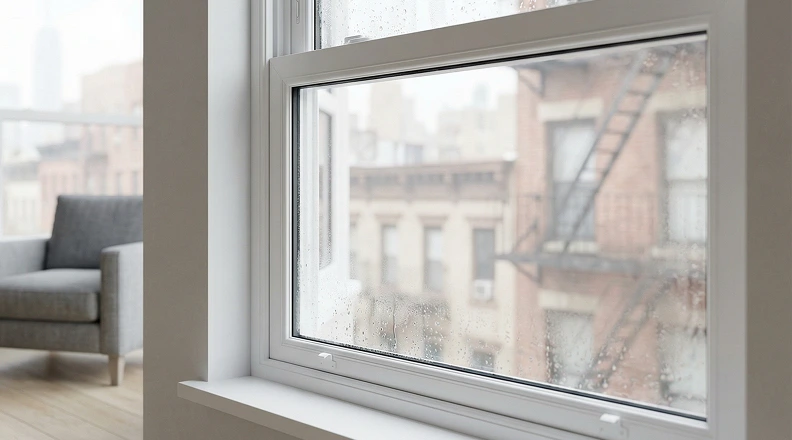
A window may still seem functional, and the changes may feel temporary at first. However, these small visual and physical shifts often point to a deeper issue that continues to evolve over time.
- A light haze that comes and goes
The first sign is often a faint cloudiness that appears under certain lighting or temperature conditions. It may be visible in the morning and less noticeable later in the day. This inconsistency can make it seem harmless, but it usually indicates that moisture has already entered the space between the panes.
- Small droplets forming inside the glass
As the issue develops, the haze can turn into visible droplets. These are not on the surface, but within the sealed unit, which makes them impossible to reach. Their presence suggests that humidity inside the glass has increased and is reacting to temperature changes in a predictable way.
- Marks and streaks that do not disappear
Moisture can leave behind residue inside the panes. This may look like streaks, stains, or uneven patches that remain even when conditions change. At this stage, the clarity of the glass is permanently affected, and cleaning will not improve the appearance.
- A gradual drop in insulation performance
Visual changes are often accompanied by functional ones. The window may feel colder to the touch, or the room may require more heating or cooling to maintain a comfortable temperature. This happens, because the insulating layer inside the unit is no longer working as intended.
These signs rarely remain static. What begins as a barely noticeable haze can develop into persistent condensation and visible damage inside the glass. The progression may be slow, but it tends to be steady. Recognizing these early indicators helps avoid uncertainty and allows you to address the issue before it affects both the appearance and performance of the window in a more significant way.
When a quick fix feels tempting
By the time condensation becomes clearly visible inside the window, the next step often feels obvious. The problem looks physical and contained, so it seems reasonable to try and deal with it directly. Many property owners look for practical ways to clear the glass without replacing the unit, and there is no shortage of advice suggesting that this can be done with simple tools or kits.
What people try
Drilling small holes into the glass unit
One of the most widely discussed methods involves drilling tiny holes into the pane to release trapped moisture. The idea is that once the moisture escapes, the fogging will disappear. In some cases, this can temporarily reduce the visible condensation. The glass may look clearer for a period of time, which creates the impression that the problem has been solved.
Using anti-fog or defogging kits
There are also commercial kits designed to treat condensation between panes. These typically involve creating a small opening, applying a chemical solution, and then sealing the hole. The goal is to remove moisture and slow down its return. For someone looking for a controlled and guided solution, this option can seem more reliable than a fully improvised approach.
Repeated cleaning attempts
Before turning to more invasive methods, many people simply try to clean the window again and again. The surface is wiped from both sides, sometimes with different products, in the hope that the haze is caused by residue or buildup. This step is completely understandable, especially in the early stages when the source of the problem is still unclear.
Why it rarely works
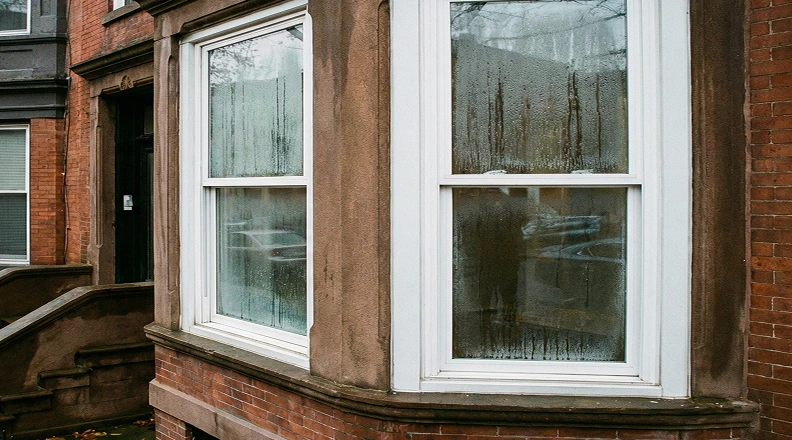
The issue exists within a sealed system
All of these approaches focus on removing or reducing visible moisture, but they do not restore the original sealed environment inside the glass unit. Once the seal has been compromised, the internal space is no longer protected from outside air. Even if moisture is temporarily reduced, new humidity can enter again under the same conditions that caused the issue in the first place.
Any improvement is usually temporary
Methods such as drilling or using defogging kits can change how the window looks for a limited time. The haze may fade, and visibility may improve. However, because the underlying cause remains, condensation tends to return. In some cases, the cycle repeats more quickly, as the structure of the unit has been further altered.
There is a risk of additional damage
Interventions that involve drilling or altering the glass unit can introduce new points of weakness. Moisture, dust, and air can move more freely, and the long term stability of the window may be affected. What begins as an attempt to improve clarity can lead to a faster decline in overall performance.
Approaching the problem on your own is a natural first reaction, especially when the goal is to avoid unnecessary costs or disruption. These methods can provide short term visual improvement in some situations, but they do not address the reason condensation formed inside the window.
Keeping the glass clear over time
Once the cause of condensation becomes clear, the focus usually shifts toward two practical questions. How can the issue be resolved properly, and how can it be prevented from returning in the future? While repairs address the current condition of the window, long term clarity depends on a combination of environmental control and regular attention to how windows perform within the space.

Professional solutions often begin with understanding the environment in which the window operates. Moisture, airflow, and maintenance habits all play a role in how well sealed units hold up over time. Addressing these factors helps reduce the pressure placed on the window system and lowers the chances of condensation forming again.
- Control indoor humidity levels
Moisture inside a building is one of the key factors that influences how windows behave. Activities such as cooking, showering, and even daily occupancy add humidity to the air. When indoor humidity remains high for extended periods, it increases the likelihood that moisture will find its way into weakened seals. Using dehumidifiers where needed and keeping humidity at a balanced level helps reduce this pressure and supports the long term performance of window units.
- Maintain consistent and effective ventilation
Air circulation plays an important role in preventing moisture buildup. When fresh air moves through a space, it helps regulate humidity and reduces condensation on and around windows. This is especially important in areas that naturally produce more moisture, such as kitchens and bathrooms. Proper ventilation creates a more stable indoor environment, which in turn reduces stress on sealed glass units.
- Schedule regular window inspections
Small changes in window performance are often easier to manage when they are identified early. Periodic inspections help detect early signs of seal wear, frame movement, or minor condensation before the issue becomes more advanced. For residential properties, routine care such as professional cleaning and inspection can be part of a broader maintenance approach. Services like Top Team window cleaning Residential services provide an opportunity to assess window condition while keeping the glass clear and well maintained.
- Account for seasonal changes
Windows respond to shifts in temperature throughout the year, and these changes can affect both the structure and the internal pressure of the glass unit. Preparing for seasonal transitions helps reduce sudden stress on seals. This can include checking for drafts, ensuring frames are properly aligned, and addressing any minor issues before extreme weather conditions arrive. A proactive approach during these periods helps maintain stability.
- Apply a consistent maintenance strategy for larger properties
In commercial buildings, the scale of the structure introduces additional factors such as higher exposure, complex ventilation systems, and continuous use. Regular maintenance becomes essential to ensure that windows perform reliably across different areas of the building. Coordinated services like Top Team window cleaning Commercial services support not only the appearance of the property, but also the early detection of issues that could lead to internal condensation.
A professional assessment allows you to see the condition of the glass unit, understand the cause of the moisture, and choose a solution that fits the situation instead of relying on assumptions. In some cases the fix is straightforward, in others early action helps prevent more extensive repairs later.
If the view through your windows has started to change and the cause is not clear, it is worth taking a closer look. Top Team window cleaning is ready to help you understand what is happening and guide you on the next step. Reach out to our team to discuss your windows and get professional guidance.