December reshapes the rhythm of retail in a way that feels almost physical. Every day brings new demands and accelerates tasks across the entire floor. Foot traffic increases and staff move between customer assistance, restocking, seasonal displays, and rapid responses to requests that would normally be spread across calmer weeks. Storefronts become core attention-drivers, so teams spend long hours adjusting décor, lighting, and layout to keep the space aligned with the holiday narrative. Operational schedules tighten until every minute is assigned to sales support, merchandising or customer flow management, and anything that is not directly tied to revenue tends to wait for a quieter moment, although quieter moments rarely happen in December.
Glass care slips from the priority list, because staff follow the rhythm of the crowd and focus on immediate operational needs, which makes window maintenance feel invisible even when it affects the overall presentation. Surfaces lose clarity faster than usual, since doors open constantly, outdoor air is colder and more humid, and winter streets leave more residue on every contact point. Prints, dust, moisture, and streaks accumulate while the team is caught between sales goals and holiday-specific tasks. As a result, windows sit at the center of the customer’s visual field while receiving the least attention, and this contrast shapes how the entire space is perceived during the busiest weeks of the year.
What happens to storefront glass when the city moves in winter mode
Buildup develops quickly in December, because winter weather brings a dense mix of moisture, slush, and airborne particles that move through commercial corridors with every wave of pedestrians. Storefront windows stand at the exact point where these elements collide, and visibility changes rapidly once the streets become busier. The National Oceanic and Atmospheric Administration explains that winter weather patterns increase the presence of fine particles and moisture in the air, conditions that can contribute to environmental accumulation on urban surfaces.
- Salt and winter street treatments
Retail corridors receive repeated applications of de-icing salt, and this material becomes airborne when churned up by pedestrian movement. It settles on the lower sections of storefront windows and its crystalline structure attaches firmly when humidity rises inside the entrance zone.
- Moisture from constant foot flow
Guests carry snow, slush, and condensation toward the display area, and each door opening releases warm indoor air that meets colder street air. This creates micro-droplets that cling to glass and trap dirt in place throughout the day.
- Airborne dust from winter activity
Deliveries, taxi lines, and crowded sidewalks increase pavement disturbance, and dust from bags, clothing fibers, and road surfaces travels short distances before settling on display glass. The effect intensifies in narrow retail corridors where airflow is constantly redirected by passing groups.
- Frequent surface contact
Dense pedestrian movement pushes customers close to the glass and gloves, coats, and shopping bags leave smudges that merge with existing residue. These small marks accumulate faster in winter, as moisture tends to soften particles and help them bind into visible patches.

Window surfaces respond sharply to this seasonal mix, since winter conditions amplify every type of buildup, and retail teams often focus on sales operations, merchandising and guest flow during the busiest month.
Where details disappear behind winter haze
Retail displays rely on precision, and December in NYC steadily works against it. Glass panels collect a dense mix of moisture, salt traces, and fine street dust, and these layers shift the way customers read prices, notice colors, or interpret the arrangement behind the window. Lower sections of storefront glass suffer the fastest degradation, because road salt settles close to the pavement, and the accumulation becomes even more visible when interior humidity creates light condensation against the colder outer surface. The result is a gradual loss of clarity that changes the way merchandise is perceived, especially in a month when display accuracy helps guide purchasing decisions.
- Blurring of pricing and small print
Winter grime changes the way light moves through the glass, and even a thin layer reduces the contrast that helps shoppers read labels quickly. Customers need more time to interpret fine print, which interrupts the natural flow of browsing and lowers the likelihood of an impulse decision. This effect becomes stronger in December, because attention is already divided between crowds, décor, and seasonal promotions.
- Distortion of product colors and shapes
Salt residue and road dust introduce a soft haze that interferes with accurate color perception. Tones appear flatter and less defined, and product edges lose crispness, which weakens the visual appeal of items that rely on precision and hue accuracy, such as cosmetics, accessories, apparel and decorative goods. When the palette looks muted, the display communicates less energy and confidence.
- Reduced impact of lighting and décor
Holiday setups depend on controlled lighting that highlights depth, texture, and focal points. When the glass carries a winter film, it scatters the beams and dull reflections, so carefully planned highlights appear softer than intended. Evening hours, which normally deliver the strongest window engagement, lose part of their effect and the illumination no longer pulls people in from the sidewalk.
- Visual noise at street level
Lower panels accumulate the heaviest mix of salt, slush droplets, and fine street debris. This buildup creates visual noise that competes with the display and breaks the sense of a unified scene. Shoppers notice the interference immediately, because it sits at eye level for children, for distracted passersby, and for anyone standing close to the window to examine the details of the layout.
The hidden weight of the season
Another difficult side of this season is the pressure it puts on store teams. Routine tasks become more demanding and processes take longer than usual. Staff navigate a steady stream of shoppers, and the flow rarely breaks throughout the day. Associates help customers choose gifts while managing returns, processing refunds, answering detailed questions, and preparing items for wrapping. Each of these steps requires time and attention, which reduces the capacity for keeping the space visually consistent.

Gift wrapping itself turns into a parallel operation that absorbs focus, and even experienced teams struggle to stay ahead of the demand. When people try to maintain speed and keep the line moving, the work that maintains the shop’s appearance begins to slip. Glass surfaces gather fingerprints quickly, and nobody has a moment to notice until the shift is nearly over.
As December progresses, extended hours and accumulated strain make this pattern even more pronounced. Even well-coordinated teams lose track of the small details that usually protect the store’s image, and windows become one of the first elements to reflect this strain. The result is a subtle mismatch between the atmosphere the brand aims to create and the one visitors encounter when approaching the storefront.
Working quietly inside a busy December
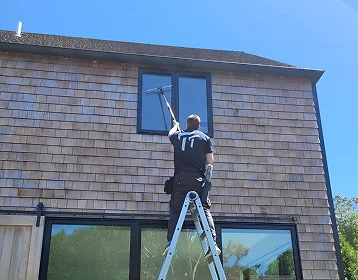
This season creates its own rhythm, and our role at Top Team window cleaning is to fit into that rhythm without interrupting the movement of the store. December brings a level of density that reshapes the entire workflow, and our services are designed to support the front of the shop while staying almost unnoticed within the flow of customers and the work of your team. We focus on the practical needs of winter retail, since glass surfaces react quickly to street conditions and require steady attention to stay clear.
Regular cleaning becomes essential during this period, as storefronts collect moisture marks, dust, and fingerprints at a faster rate. Lower panels need particular care. Each step during the winter season brings salt and road residue indoors, and our team increases cleaning frequency to keep these zones clear. In situations where deposits harden or chemical reactions from de-icing agents appear, we use chemical cleaning to restore clarity, and the process is scheduled around quieter hours, so that it does not interfere with merchandising.
Many stores rely on night-time cleaning in December, and this method often proves the most effective when foot traffic remains heavy until closing. Our teams work after the last shopper leaves, which allows us to reach exterior and interior glass without disturbing visual setups. Some locations request pressure washing for the zones surrounding entrances, as pavements gather dirt that quickly transfers to door glass.
Holiday weekends sometimes require quick interventions, especially before promotional days, and our 24/7 emergency service helps maintain presentation standards when the store schedule leaves no margin. Larger properties often need rope access solutions for upper-level glazing, and we coordinate these sessions with management, so customer routes and staff routines remain uninterrupted.
All these services are structured to support the pace of December retail, and every store receives a schedule that reflects its traffic patterns, opening hours, and merchandising cycle. If you want the storefront to hold its clarity through the busiest days of the season, reach out to start a plan that fits naturally into your workflow and keeps the space aligned with the experience you want visitors to take with them.