From summer grime to fall-ready: getting NYC high-rises pressure washed before the cold sets in
By midsummer, a high-rise facade in New York has been carrying months of exposure that most people walking past never notice, because the accumulation happens slowly enough that no single day looks different from the last. Then a certain angle of afternoon light hits the stone or the glass just right, and what looked clean a week ago suddenly reads as dull, streaked, or gray at the base where runoff collects. That moment tends to be the one that gets a property manager reaching for the phone, and this year it arrives with a deadline attached.
New York's fall calendar fills fast. Galas, weddings, building open houses, and the first wave of holiday events all land in the same stretch of months, and every one of them puts a building's exterior in front of guests who form an impression before they reach the door. That gives high-rise owners and managers a real reason to move now instead of waiting, because the work that keeps a facade looking sharp through that season also happens to be the same work that has to stop once the weather turns.

What a NYC summer leaves on a high-rise facade
Heat, humidity, and the particular mix of exhaust and airborne particulate that settles over a dense city accumulate on stone, brick, glass, and metal in different ways, which is why a single facade can show streaking on the glass, a dull haze on the stone, and a darker tone along the metal trim, all from the same few months of exposure. Humidity also does something less visible: it keeps organic growth active on porous surfaces like limestone and brick, so algae and mildew get a longer runway to take hold than they would in a drier season. That's one reason a summer's worth of buildup is rarely uniform. A south-facing wall that catches more sun and rain runoff often needs a different approach than a shaded courtyard side, and a building near a bus corridor or a construction site collects a heavier layer of particulate than a quieter block would.
Why the pressure-washing window closes as the weather turns
New York's own climate data makes the deadline concrete rather than a vague seasonal gesture. Normal lows in Central Park sit around 46°F on November 1 and drop to roughly 38°F by November 30, and that steady decline matters because pressure washing depends on water drying fully before temperatures dip toward freezing. Water that lingers in mortar joints, window seals, or stone pores and then freezes can expand and cause the kind of damage the cleaning was supposed to prevent, which is why crews stop scheduling exterior washing once that risk becomes real rather than theoretical. This isn't a universal rule for every building. A property with no fall events on the calendar and no urgent visible buildup can reasonably wait for spring, since the work itself is just as effective in that season and the risk of frozen runoff simply isn't a factor once winter has passed. The deadline is calendar-driven, not a hard requirement that applies to every building equally.
Why fall's event season raises the stakes
For a building hosting a gala, a wedding reception, a broker open house, or even a routine board meeting with outside guests, the facade is doing quiet work before anyone steps through the lobby doors. A clean, even exterior signal that the property is actively maintained, while streaking or a dulled stone base can undercut that impression before a single conversation happens. That's exactly why the timing question shifts for these properties: the work isn't just routine maintenance anymore, it's part of preparing the building for a specific stretch of the calendar where more people than usual are looking at it closely.
What a realistic timeline looks like on a compressed calendar
Getting a high-rise ready before that window closes takes more lead time than most property teams expect, because the project depends on several variables lining up.
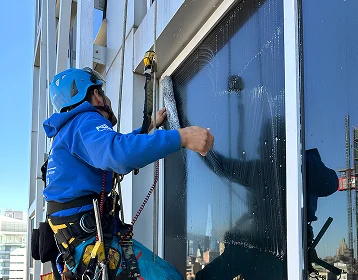
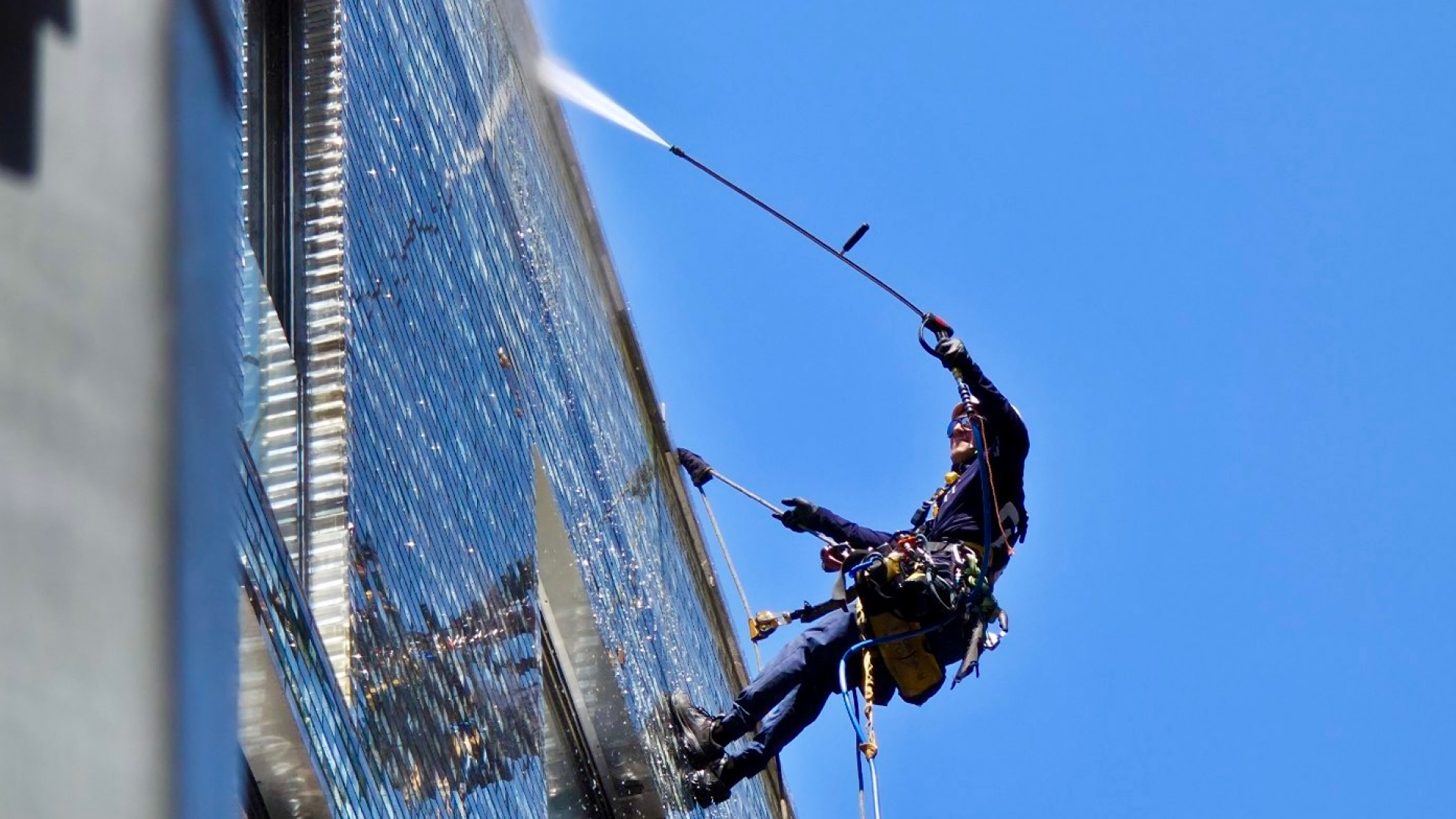
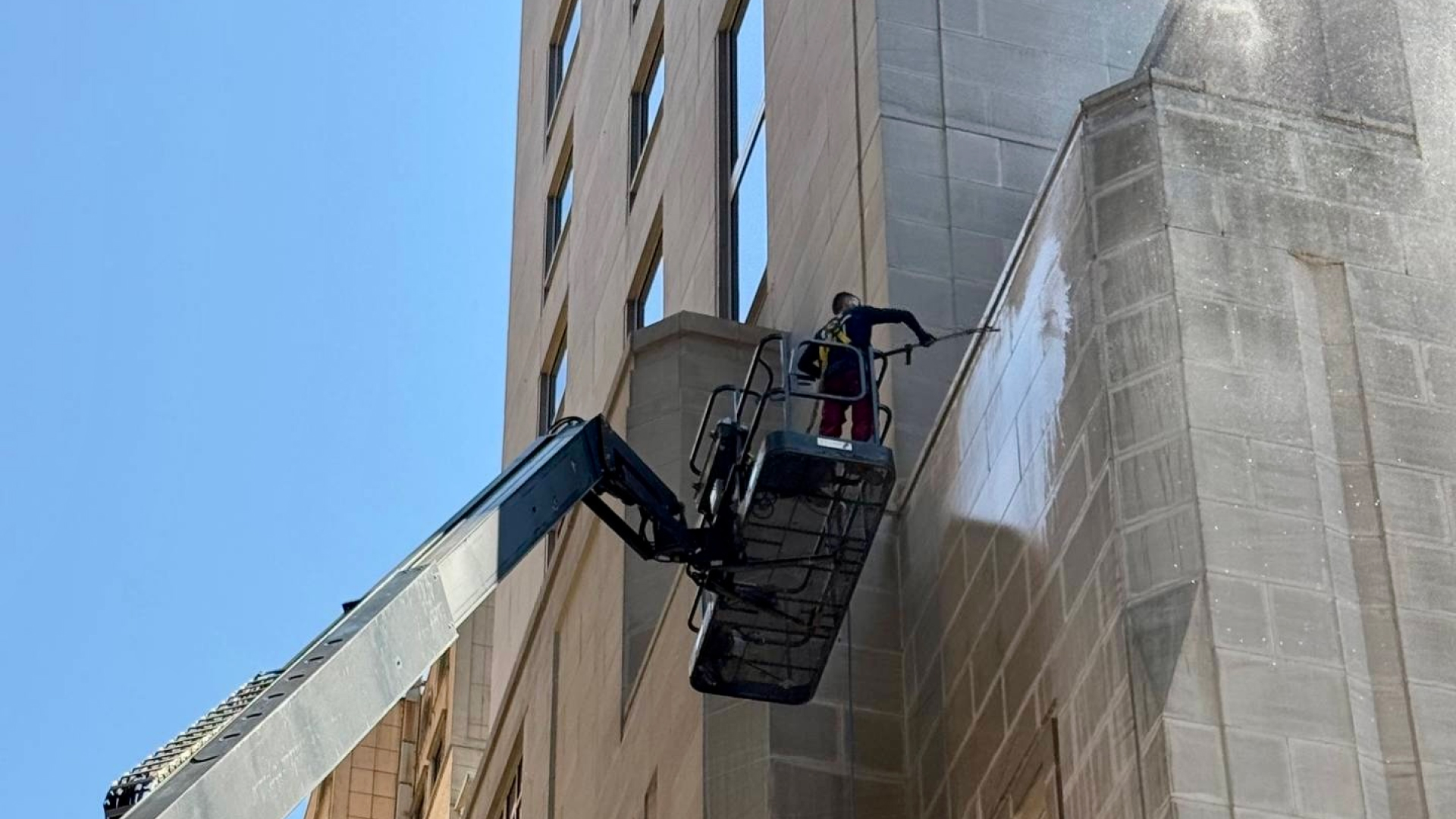
- Building height and access method determine how long the work itself takes, since a facade that requires rope access or a boom lift moves at a different pace than one reachable from ground-level equipment, and taller buildings often need more than one access method across different sections of the same wall.
- Facade material changes both the technique and the timeline, because glass curtain walls, brick, limestone, and painted metal all call for different pressure levels and drying considerations, and mixing materials on one building means the crew is effectively running several jobs in sequence.
- Weather-dependent scheduling builds in buffer days, since a wet or unusually cold stretch can push a project back, and a compressed fall calendar has less room to absorb that kind of delay than a spring project would.
- Building approvals and coordination with management, tenants, and any required notifications add real time before equipment ever goes up, which is why the planning conversation needs to start well before the target event date, not the week of.
Coordinating access and scheduling without disrupting a working building
A high-rise doesn't pause its normal operations for exterior work, so the scheduling has to account for tenants, deliveries, and street-level activity around the building at the same time it accounts for weather and access.
- After-hours and early-morning scheduling lets crews work sections of the facade before foot traffic and tenant activity pick up, which reduces both disruption and the safety complications of working above an active sidewalk.
- Sequencing by facade section allows a building to keep its main entrance and most visible elevations clear for as long as possible, saving less visitor-facing sides for whatever scheduling gaps remain.
- Coordination with building management and any board or ownership group has to happen early, since roof access, elevator use, and street permits for equipment all typically require lead time and sign-off before a crew can mobilize.

Planning ahead with Top Team
Top Team has spent 17 years working on New York facades, including a recent high-rise pressure washing project that involved the same kind of planning this article describes, weighing height, facade material, and a tightening calendar before a single piece of equipment went up. That experience is part of why the planning conversation matters as much as the equipment itself: choosing between rope access, aerial lifts, and other methods depends on the building's height, facade material, and how much of the wall needs attention before the season closes.
For property managers overseeing high-rises in Manhattan and Brooklyn where a fall event calendar is already filling in, the practical move is starting that conversation now, while there's still enough of the season left to plan around weather instead of racing it. Top Team works with commercial and property management teams across NYC on exactly this kind of seasonal timing question, and a free estimate is the fastest way to find out what a realistic schedule looks like for a specific building before the weather makes the decision instead.
Disclaimer: This blog is maintained by Top Team Window Cleaning for general informational purposes only. The content does not constitute professional, legal, safety, engineering, or regulatory advice and should not be relied upon as such. Third-party statistics, studies, regulations, and research are sourced from publicly available information and provided for general context. Top Team Window Cleaning does not guarantee their accuracy, completeness, or applicability to a specific property or project. Service requirements, access methods, timelines, and results may vary based on building conditions, location, scope of work, and applicable NYC regulations. Any content authored or posted by Top Team Window Cleaning employees reflects general industry knowledge and individual perspectives and does not represent official guidance from regulatory agencies or affiliated organizations.