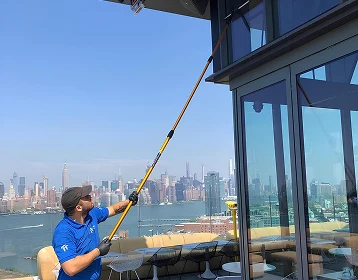
Staten Island has always occupied a slightly different place within New York City. While Manhattan is defined by dense blocks and towering buildings, and parts of Brooklyn and Queens are shaped by constant urban activity, much of Staten Island is characterized by detached homes, larger residential lots, tree-lined streets, and a closer connection to parks, shoreline areas, and open space. The borough is widely recognized for its extensive green spaces and suburban character, which set it apart from the rest of the city.
Those differences influence how properties age and how exterior surfaces accumulate dirt. A home surrounded by mature trees faces different conditions than a storefront on a busy commercial corridor, and a property located near the waterfront is exposed to environmental factors that are rarely encountered farther inland. As a result, window cleaning on Staten Island often involves a different set of challenges than similar work in other parts of NYC.
That combination of suburban-style housing, abundant green space, and waterfront exposure is one reason window cleaning Staten Island homeowners and business owners require often looks different from window cleaning elsewhere in the city. Understanding the local environment is an important part of maintaining clear glass and helping properties look their best.
What the island leaves behind on your windows
Staten Island is the southernmost borough of New York City, and it is also known for its suburban character, broad parkland, and long waterfront exposure, which means many properties sit closer to trees, open space, and coastal air than homes in denser parts of the city. That mix changes how quickly glass and exterior surfaces pick up residue, and it helps explain why window cleaning Staten Island homes and businesses often follow a different scenario.
One of the most consistent factors is airborne pollution. Although Staten Island is often perceived as less densely developed than other boroughs, windows are still exposed to particles produced by vehicle traffic, construction activity, and everyday urban life. These particles settle on glass surfaces and create the hazy layer of buildup that property owners frequently notice between cleanings.
Another contributor is moisture, which remains a year round part of the local environment. Rain, humidity, morning condensation, and changing temperatures all influence how quickly dirt adheres to glass. When moisture combines with existing residue, windows often lose their clarity faster and become harder to keep clean through routine cleaning alone.
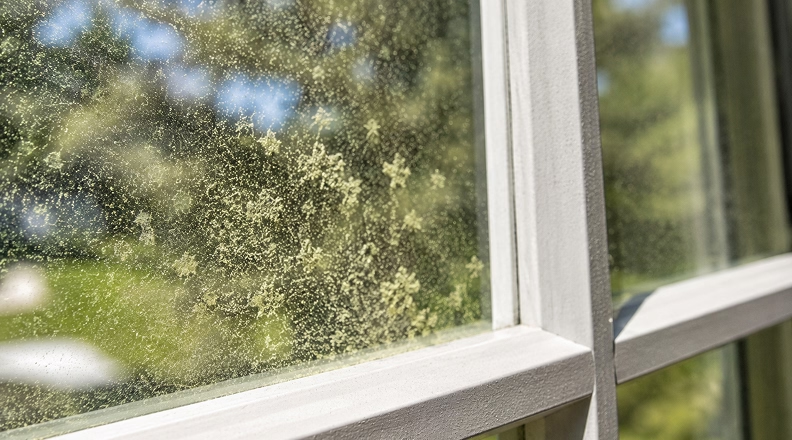
Seasonal changes introduce their own challenges. Spring brings pollen from trees and landscaping, summer often leaves behind dust and organic particles carried through the air, autumn introduces leaves, plant debris, and fine particles that settle onto exterior surfaces. Even properties that appear relatively sheltered can experience noticeable accumulation as the seasons change.
Many homes and businesses are also affected by traffic dust, particularly those located near major roads, commercial corridors, or frequently travelled local streets. Fine dust particles remain airborne for long periods and gradually collect on windows, frames, and surrounding exterior surfaces.
Areas that remain damp for extended periods can also experience algae and mildew growth, especially on shaded sides of buildings where sunlight is limited. While these issues tend to be more visible on siding and masonry, they often contribute to the overall appearance of exterior surfaces surrounding the windows as well.
What makes Staten Island particularly distinctive is its exposure to surrounding waterways. Properties located near the shoreline encounter additional challenges from salt residue, which can be carried inland by coastal winds and deposited on exterior surfaces. That residue contributes to a hazy appearance on glass and often increases the frequency with which windows require professional cleaning.
The waterfront environment also brings wind driven debris into the equation. Air currents moving across open shoreline areas can carry fine particles, sand, dust, and organic material that eventually settle on windows. Combined with moisture from the surrounding coastal environment, this creates conditions where buildup develops more quickly than many property owners expect.
The same borough, but very different windows
The factors that affect a property don’t stop at location alone. The type of building often shapes the cleaning process just as much as the surrounding environment, because the needs of a detached home, a neighborhood storefront, and a mixed use building can be very different even when they stand only a few blocks apart.
Residential properties
- Single family homes
Detached homes often have windows on all sides of the property, which means they are exposed to different weather patterns. Some elevations receive stronger sunlight, others remain shaded for longer periods and may collect moisture, pollen, or organic residue more easily. Homes surrounded by trees or landscaping frequently require additional attention, because airborne debris tends to settle on the glass.
- Townhouses
Townhouses typically offer less exposure on the sides of the building, but front and rear windows still experience seasonal buildup from traffic, weather, and neighborhood activity. Access can also vary depending on the layout of the property, fencing, architectural features that influence how the work is performed.
- Larger suburban properties
Some Staten Island neighborhoods feature larger homes with multiple stories, expansive facades, sunrooms, and extensive window systems. These properties often require a broader maintenance strategy, because the amount of glass, the height of the structure, and the variety of window types can all influence the scope of the project.
Commercial properties

- Storefronts
Retail windows serve as one of the most visible parts of a business. Fingerprints, dust, water spots, and street level residue become noticeable quickly, especially in areas with steady pedestrian traffic. Because storefront glass functions as part of the customer experience, cleaning schedules are often based on maintaining a consistently professional appearance.
- Office spaces
Office buildings benefit from clean windows in several ways: Clear glass helps improve the overall appearance of the property, allows more natural light into workspaces, contributes to a cleaner environment for employees and visitors. Depending on the size of the building, maintenance may involve both interior and exterior cleaning on a recurring schedule.
- Mixed use buildings
Mixed use properties combine residential and commercial spaces within the same structure, which often creates unique requirements. Ground floor businesses need more frequent service, but upper residential floors follow a different maintenance cycle.
Looking beyond the glass
The setting shapes the service, but the property type shapes the pace, the access, and the finish. The borough is known for its suburban feel, broad parkland, waterfront exposure, which means residential homes and commercial properties often collect buildup in different ways and need different levels of attention.
Residential buildings usually have more glass facing open air, landscaping, and seasonal debris, so work often focuses on restoring clarity, keeping light flowing indoors, and staying ahead of the buildup that comes with trees, weather, and everyday outdoor exposure. The needs can vary a lot from one home to the next, so residential services usually fit best when the work is planned around the layout of the house rather than treated as a simple repeat job. On a borough with this much greenery and open space, that flexibility matters more than it might in denser parts of the city.
Commercial storefronts need glass that looks sharp from the sidewalk, office spaces benefit from cleaner light and a more polished appearance, and mixed-use buildings often need both concerns handled at the same time. That means the approach has to account for scheduling and the way customers or tenants experience the property throughout the day. Commercial services make the most sense when the goal is steady presentation and a process that fits the business without getting in the way of it.
However, windows rarely get dirty on their own. The same weather, moisture, tree cover, and street residue that affect the glass usually affect nearby surfaces as well, which is why window cleaning often pairs naturally with exterior care. When the property needs more than a glass-only service, pressure washing helps keep the wider exterior consistent so the windows aren’t doing all the work visually. That is the practical part of window cleaning property owners tend to notice most. The same borough can ask for very different solutions, and the right service is the one that reads the property first.
Working with the realities of the borough
Top Team works throughout Staten Island and serves homes, businesses, and mixed use buildings across the borough. Familiarity with Staten Island neighborhoods helps support efficient scheduling, appropriate access planning, and a service approach that reflects the requirements of each site. Homes located near the waterfront often face different challenges than properties surrounded by mature trees, while commercial locations require maintenance schedules that support daily business operations.
The focus remains on understanding the building, the environment around it, and the goals of the owner or manager. That practical approach helps ensure that window cleaning supports both appearance and long term upkeep.
Contact our team today to discuss your window cleaning needs and schedule your service.