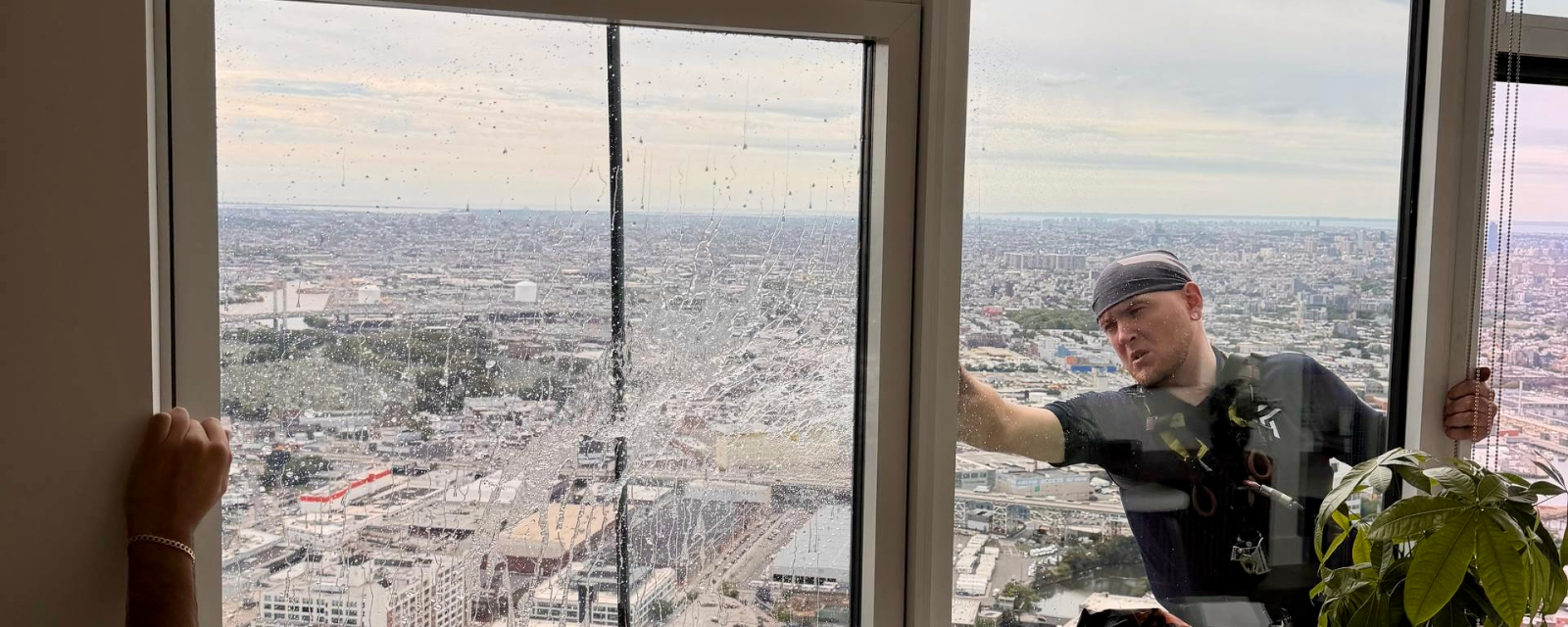
When the city brings in the inspection teams and the ropes start going up the side of an older building, that's usually when the real story of the facade comes out. For decades, a building's exterior may have looked mostly intact from the street. Then a QEWI, a Qualified Exterior Wall Inspector, gets close enough to the masonry and the mortar to see what's actually happening, and water infiltration patterns emerge that weren't visible from ground level. That's the moment when facade repair scope goes from predictable to complicated, and when a phased, evidence-based approach to investigation and repair becomes essential.
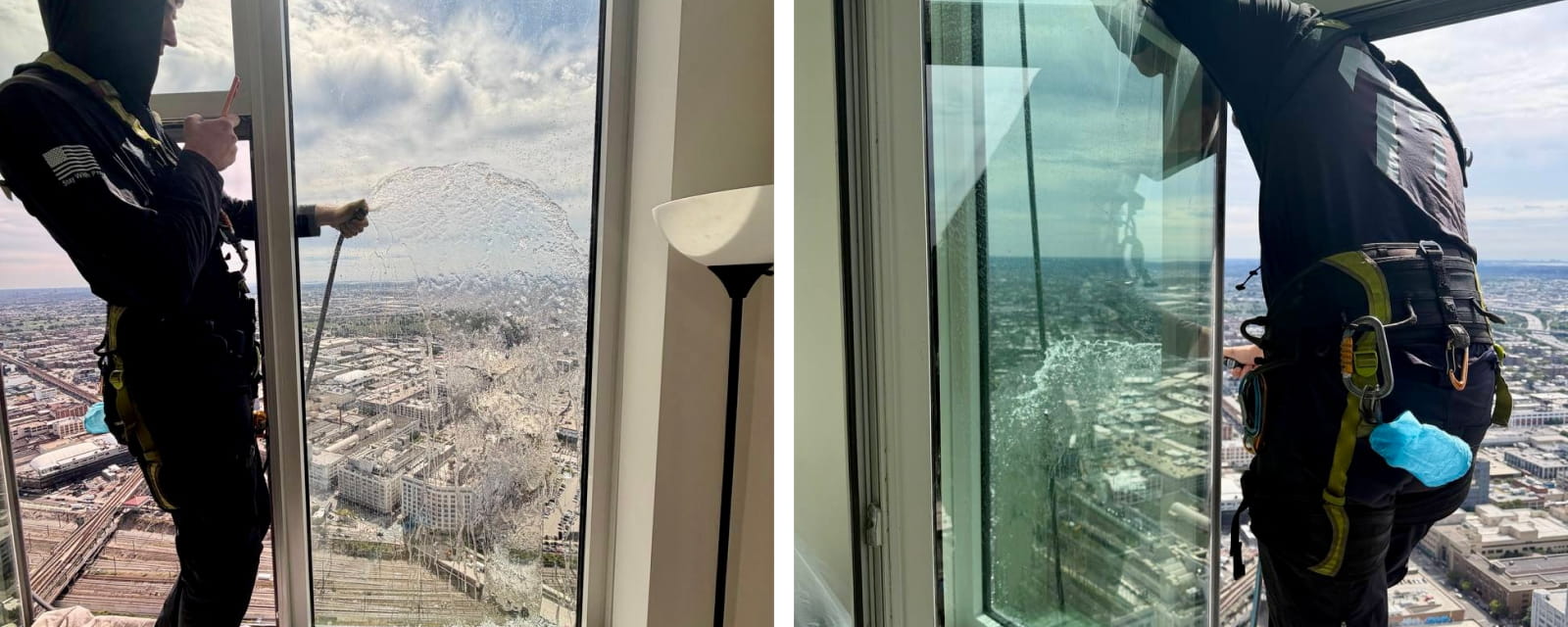
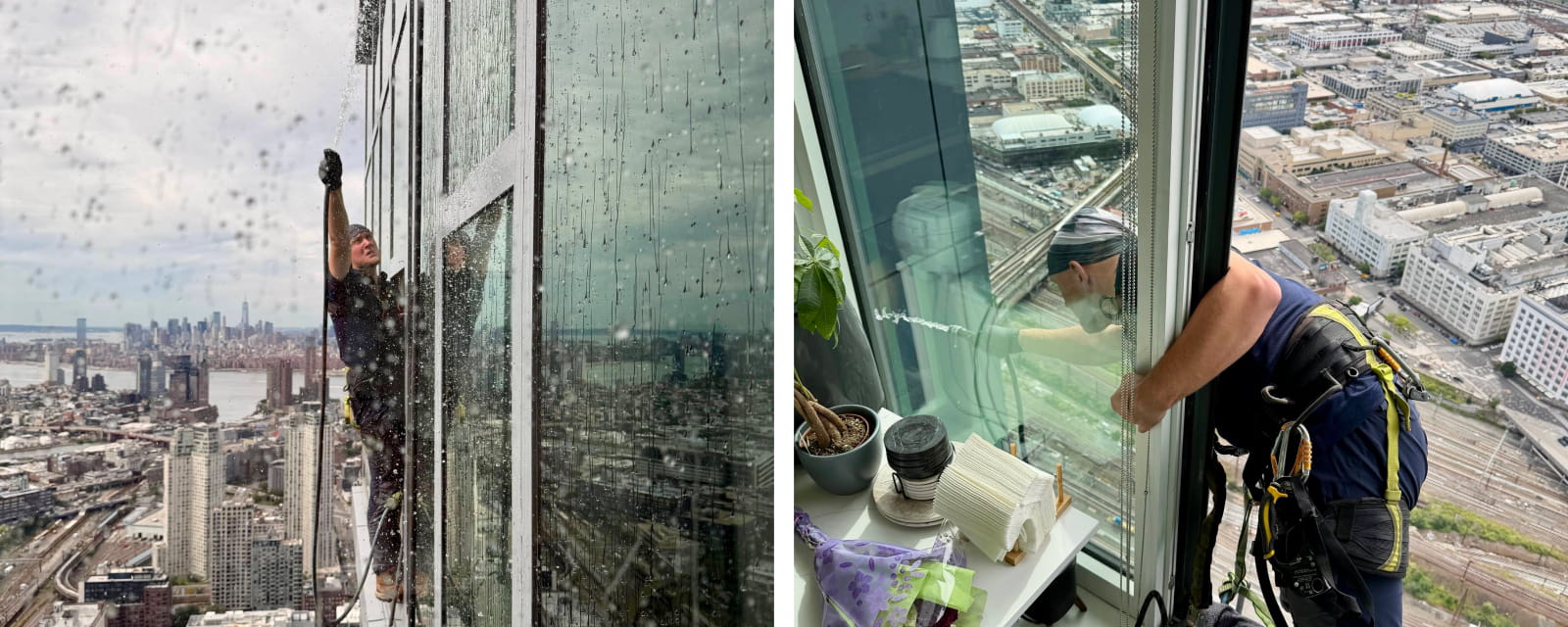
Rope access is the standard inspection approach on high-rise buildings in NYC where traditional scaffolding or aerial lifts aren't practical, and it's how inspectors catch water damage that distance-based observation alone cannot detect. Learn more about Top Team's rope access capabilities.
Why rope access is required for NYC FISP inspections
According to New York City's Department of Buildings requirements for FISP (Facade Inspection Safety Program), inspectors must conduct close-up examinations at intervals not exceeding 60 feet along the building's facade fronting the public right-of-way. The rule exists for exactly this reason, water infiltration and concealed wall damage cannot be reliably detected from a distance.
A rope access inspector can examine the actual condition of mortar joints, probe into cracks that may harbor water, look for signs of efflorescence or water staining that indicate past or active infiltration, and document conditions with photographs and hands-on assessment that observation from ground level cannot provide.
Water damage detection requires this close-up work. Water moves through masonry in ways that don't show up in distance observation, traveling behind facade materials, through masonry, around flashing, at roof and parapet transitions, or around window perimeters before showing up inside a building. A crack that looks small from ground level may be the entry point for water that's been migrating through concealed cavities for years. Only a close-up, hands-on inspection, the kind rope access makes possible, can identify those conditions.
What inspectors look for: patterns, not just damage
A trained rope access inspector performing a FISP inspection is looking for several specific indicators that water infiltration is either happening or has happened in the past.
Starting with the 9th FISP cycle, inspectors are also required to probe cavity walls to assess the condition of wall ties and their spacing, an investigation that cannot happen remotely. These probes reveal whether the air space that should insulate the building from water infiltration is actually functioning, or whether concealed corrosion and moisture have compromised the system.
Rope access also makes it possible to coordinate with other investigative tools on site:
- Infrared thermography, which detects moisture through temperature differential, can be conducted while an inspector is positioned to interpret thermal images in real time
- Water pressure testing can be performed on specific areas of concern
- Investigative probes that temporarily open the facade to inspect concealed conditions are far more practical when a trained technician is already anchored at the location
Leak history: the piece that makes repair planning possible
Once a rope access inspection reveals water infiltration evidence, the next question is not just "how much is leaking," but "how long has this been happening, and where is the water actually coming from?" This is where leak history becomes critical to repair scope and cost.
If a building's interior has documented history of water complaints in certain apartments or along certain floor lines, that history creates a map that an inspector can use to connect exterior conditions to interior symptoms. Understanding leak history alongside facade conditions helps distinguish between limited, targeted repairs and more comprehensive approaches that might address interconnected problems during a single project phase.
A building with water damage showing up consistently along one vertical line of the facade probably has a problem at a specific window head, flashing detail, or parapet transition that can be targeted. A building with scattered interior complaints across multiple floors and wings might have a systemic envelope failure, including failed wall ties, deteriorated mortar throughout, or a perimeter condition that affects the whole facade. The repair strategy for these two scenarios is completely different. Rope access inspection combined with leak history mapping is what allows a contractor to distinguish between them before quoting a repair price.
Phased inspection and investigation before full repair
This is exactly why most buildings with water infiltration discovered during FISP don't move straight into a single repair phase. Instead, the process typically unfolds in stages. The initial close-up FISP inspection by rope access identifies the problem areas and leak patterns. If the leak history or the inspection findings suggest that more information is needed before a repair scope can be confidently established, selective investigative probes or water pressure testing can be performed at specific locations. Only once that investigation is complete can a realistic repair scope and budget be developed.
This phased approach costs more upfront than simply hiring a contractor and telling them to fix everything. But it costs considerably less than mobilizing expensive equipment and crews, only to discover hidden conditions partway through the work and have to restart with a new scope and timeline. For older NYC buildings especially, including pre-war buildings with terra cotta ornament, masonry with failing mortar, and mixed materials that have different expansion rates, the hidden-conditions risk is high enough that a phased investigation pays for itself.
Why Top Team's rope access capability matters for this work
Top Team has spent over a decade performing high-rise facade work on NYC buildings, from routine window cleaning to structural rope access inspection and repair support. Rope access isn't a convenience for a job like this; it's the only practical way to conduct the close-up FISP inspection that NYC buildings are required to have, especially on irregular facades, older buildings, and structures where aerial lifts can't operate.
When water infiltration has been suspected or discovered during an inspection, Top Team's rope access teams can work alongside your QEWI to conduct investigative probes, coordinate infrared thermography, and help document conditions for the repair planning phase. Top Team also handles the access work for repairs once a scope has been established, which means the same skilled technicians who understood the inspection conditions are available to execute the remedy.
For commercial property managers preparing for or already in a FISP cycle, getting the right access method for your inspection stage is the difference between good information and expensive guesswork. If your building's inspection is showing signs of water infiltration or concealed wall conditions, rope access and close-up investigation are how you move from uncertainty to a real repair plan. For buildings moving into the repair phase, see how leak history shapes your repair timeline and costs.
Contact Top Team for a consultation on FISP inspection access and planning, or to discuss facade repair strategy once inspection findings are in.
Sources
All regulatory information and FISP requirements cited in this article are sourced from official New York City Department of Buildings guidance:
- NYC Department of Buildings - Facade Inspection Safety Program (FISP)
- NYC DOB Local Law 11 / FISP Requirements