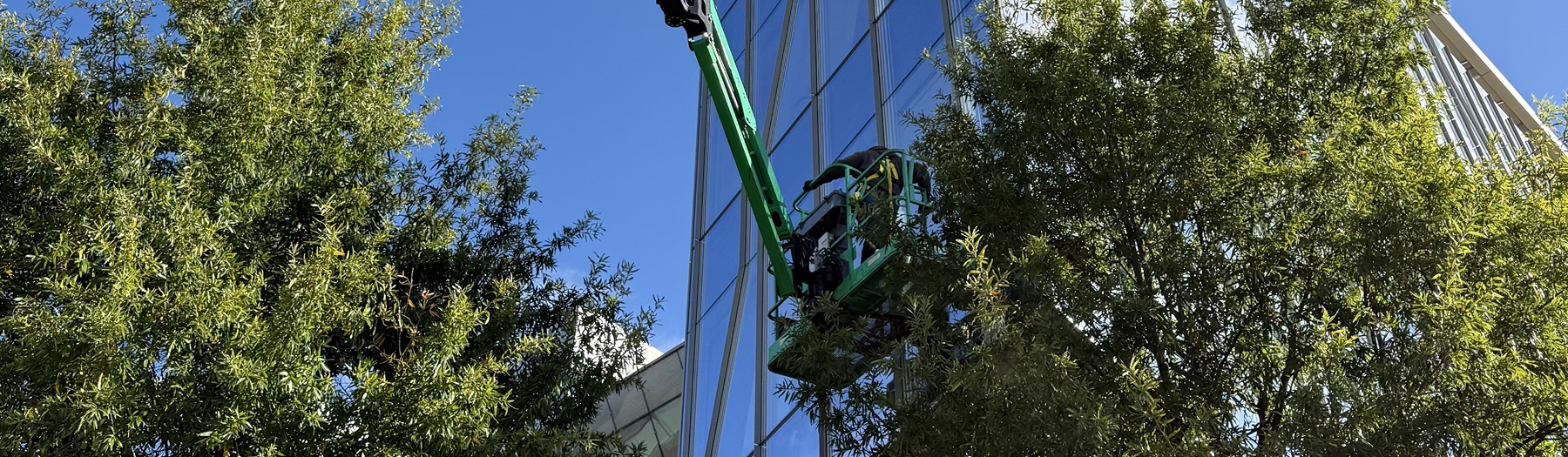
By summer, windows clearly show all the dust that has collected, and the change is usually easier to notice, because the stronger daylight lets dull glass stand out much more clearly than in spring. That effect is reinforced by neighborhood air quality, since NYC’s air pollution is tracked seasonally at street level across the city, and that kind of everyday buildup speeds up the loss of clarity on exterior glass in some areas more than in others.
Summer also overlaps with a period when pollen remains an active part of the outdoor environment, and grass pollen is especially present through the warmer months of June, July, and August, which means it settles on glass, frames, and surrounding exterior surfaces while the season is still in full swing. That is one reason seasonal window cleaning becomes easier to justify in summer than it seems at first, as visible dirt is just one piece of it, while light, pollen, dust, and rain marks come together and end up changing the actual feel of the windows.
That usually means the windows look fine from a distance until the light hits them at the wrong angle, and then the difference becomes hard to ignore. What seemed like a minor film in the morning can make the whole facade feel less fresh by afternoon, which is exactly why summer is one of the clearest moments to think about seasonal window cleaning.
Why window cleaning is often easier to plan in summer
Summer doesn't solve every maintenance issue, but it removes some of the small obstacles that disrupt window cleaning schedules, which are easier to set when the forecast is less erratic, and the work itself tends to feel more manageable when the season offers more flexibility for planning ahead.
More stable weather is the first reason many people look at this time of year. New York can still get sudden storms in summer, but the season usually offers longer dry stretches than the colder months. That kind of predictability is essential, especially when a property needs exterior work done without repeated delays. There is also less dramatic temperature change. Glass reacts to shifts in heat and cold, so a week with sharp jumps of temperature complicates maintenance compared to a stretch of steady weather. Summer isn't uniform, of course, but it often brings a calmer pattern that is easier for cleaning teams and property owners to work around.
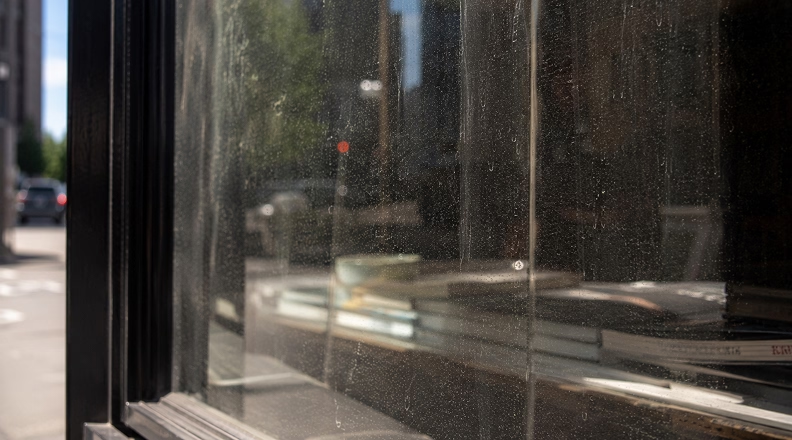
There is simply more time to see what is happening on the glass with longer daylight hours. Smudges, mineral spots, pollen, leftover grime are easier to notice in natural light, and that makes the inspection more useful before and after the cleaning. Just as important, summer gives crews and owners a better chance to inspect the windows closely. Once the glass is clean, small issues stop hiding in the background. A worn seal, a crack that was easy to miss, or a frame problem that needs attention is easier to spot sooner, which gives everyone more time to plan the next step instead of discovering it later.
Why New York summer grime shows up so fast
The buildup that appears on windows in July often looks different from what remains after winter. Cold weather tends to deposit salt residue and road grime, while summer deposits are usually lighter in color, but arrive from several directions at once. Airborne particles settle on the glass throughout the season, humidity helps them adhere to the surface, and occasional storms leave marks that are increasingly noticeable in direct sunlight
- Spring may be the peak season for tree pollen, but summer continues to bring significant amounts of pollen. Fine pollen particles settle on glass, window frames, and screens, creating a thin film that often becomes visible only after it has accumulated for several weeks. If the windows remain untouched, morning dew or light rain cause that layer to stick even more firmly to the surface.
- Summer air in New York is typically more humid than during the colder months. Moisture itself doesn't dirty the glass, but it helps airborne particles settle more easily and slows their natural removal. As the moisture evaporates, it also leaves behind faint mineral marks that gradually reduce clarity.
- Every neighborhood generates its own mix of airborne dust. Traffic, pedestrian activity, landscaping, everyday movement continuously lift fine particles into the air, where they eventually settle on nearby buildings. Windows facing busy streets usually collect this layer faster than those located on quieter residential blocks.
- Ongoing development is part of everyday life in many parts of New York City. Renovation projects, facade work, sidewalk improvements, and new construction release dust that spreads far beyond the immediate job site.
- A summer rainstorm rarely leaves windows as clean as people expect. Rain carries airborne particles onto the glass, and once the water dries, small spots and streaks often remain behind. Wind adds another layer by carrying pollen and dust against the building, particularly on higher floors and more exposed elevations.
Finding the right window cleaning schedule
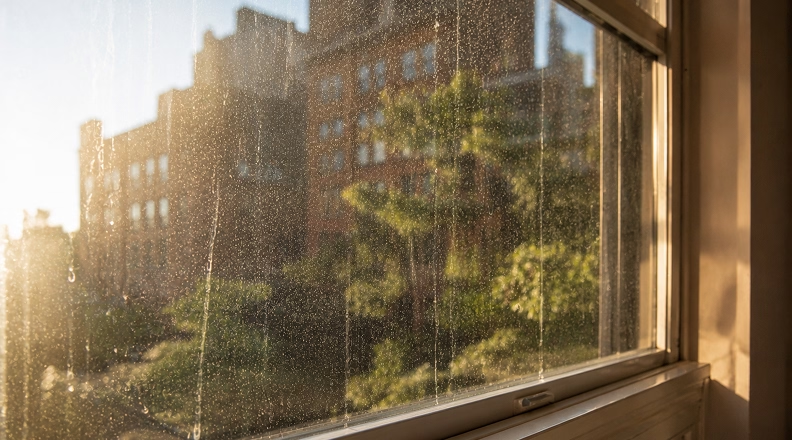
On very hot days, glass warms quickly, especially on south and west facing elevations. Heat matters, because the cleaning solution dries faster on a heated surface, which leaves less room for an even finish and raises the chance of residue. Many crews therefore prefer early morning or late afternoon appointments, when the glass stays cooler. Bright weather helps with visibility during an inspection, but it also speeds up evaporation on the glass. Direct sunlight becomes a problem when it hits the facade for long stretches, so shaded elevations or a schedule that follows the sun often give more stable working conditions.
Checking the forecast before a booking saves trouble later. A short shower after the work is finished doesn't automatically leave dirty windows, since ordinary rainwater isn't the main source of streaks. The bigger issue appears when rain follows a dusty or pollen heavy stretch, because wet glass collects those particles and shows them once the surface dries. Thunderstorms bring shifting wind, lightning, and sudden drops in visibility, so exterior work may need to pause or move to another day for safety. Crews that watch the forecast throughout the day usually have more flexibility to adjust before conditions turn unsuitable for work at height.
And the next step is deciding how often windows should be cleaned, and that answer depends far more on the property itself than on a fixed number of visits each year. A schedule that works well for one building proves completely impractical for another, even if they are only a few blocks apart. Thus, when scheduling window cleaning, it helps to consider several factors:
- Building location
Properties along busy avenues or commercial corridors are exposed to a constant flow of airborne dust and traffic related residue. Homes on residential streets often accumulate buildup at a different pace, while buildings near parks, waterfronts, or construction sites have their own maintenance patterns.
- Building height
Lower floors are affected more by street level activity, while upper floors are exposed to stronger winds that carry fine particles across the glass. The result is that some areas of the same building require attention sooner than others.
- Nearby trees and landscaping
Mature trees contribute shade during the summer, but they also release pollen, leaves, sap, and small organic debris. Homes surrounded by greenery often benefit from more frequent maintenance than properties with little vegetation nearby.
- Daily traffic around the property
Storefronts, office buildings, restaurants, and mixed use properties generally experience heavier pedestrian and vehicle traffic than residential neighborhoods, and that activity keeps dust circulating during the entire day, allowing it to settle continuously on exterior glass.
Keeping the season on track

By the end of summer, the difference between occasional cleaning and a well planned maintenance routine is usually easy to see. Properties that follow a consistent schedule tend to stay cleaner throughout the season, while unexpected buildup is less likely to turn into a larger maintenance issue.
Top Team window cleaning provides professional services across New York City, working with both homeowners and businesses. Whether a property requires residential window cleaning for a single family home or apartment building, or commercial window cleaning for an office, retail space, or mixed use property, every service is planned around the building's location, exposure, and maintenance goals.
For clients who prefer ongoing care, regular window cleaning services provide a practical way to maintain clear glass over the summer months without having to decide after every heat wave or heavy rain when the next appointment should be scheduled. When exterior surfaces also need attention, window cleaning can be coordinated with pressure washing services, allowing different aspects of exterior maintenance to be completed during the same visit whenever appropriate.
Summer remains one of the busiest seasons for window cleaning, and appointment availability tends to get limited as the season goes on. If you are planning a summer cleaning, a consultation lets you choose a service date that works well for your schedule and keeps your home or commercial property looking its best.